
Turn Unused Basement Space Into Livable Area
Basement finishing services in Warwick, Rhode Island to convert unfinished space into functional rooms with proper moisture management and building code compliance.
Your basement in Warwick may be dry and structurally sound but sitting empty because it lacks finished walls, flooring, and lighting. Concrete floors, exposed joists, and bare foundation walls make the space unsuitable for anything beyond storage, even when the bones are solid. Whether you need a home office, guest suite, recreation room, or in-law space, finishing the basement adds usable square footage without expanding your home's footprint. J and J Building and Remodeling LLC provides basement finishing services throughout Warwick and surrounding areas, with attention to moisture management considerations common in the region.
The service includes framing, insulation, drywall, flooring coordination, and lighting installation. The work is designed to meet local building requirements and create a comfortable, code-compliant living area. Moisture barriers, vapor control, and proper ventilation are incorporated to prevent mold and humidity issues that can undermine finished basements in this climate. The result is a space that feels like part of the main house rather than an afterthought, with walls that stay dry, floors that remain stable, and lighting that makes the area usable at any time of day.
If you have unused basement space in Warwick and want to make it livable, contact J and J Building and Remodeling LLC to discuss what finishing the area could involve.
Framing and Insulating Below Grade Without Trapping Moisture
Finishing a basement in Warwick starts with assessing the foundation for moisture intrusion, cracks, or drainage issues. If water is entering through the walls or floor, that must be addressed before framing begins. Once the space is confirmed dry, framing is installed with appropriate clearance from foundation walls, insulation is added using moisture-tolerant materials, and drywall is hung with mold-resistant board in areas prone to humidity. Electrical rough-ins are coordinated to provide adequate outlets, overhead lighting, and switches in logical locations.
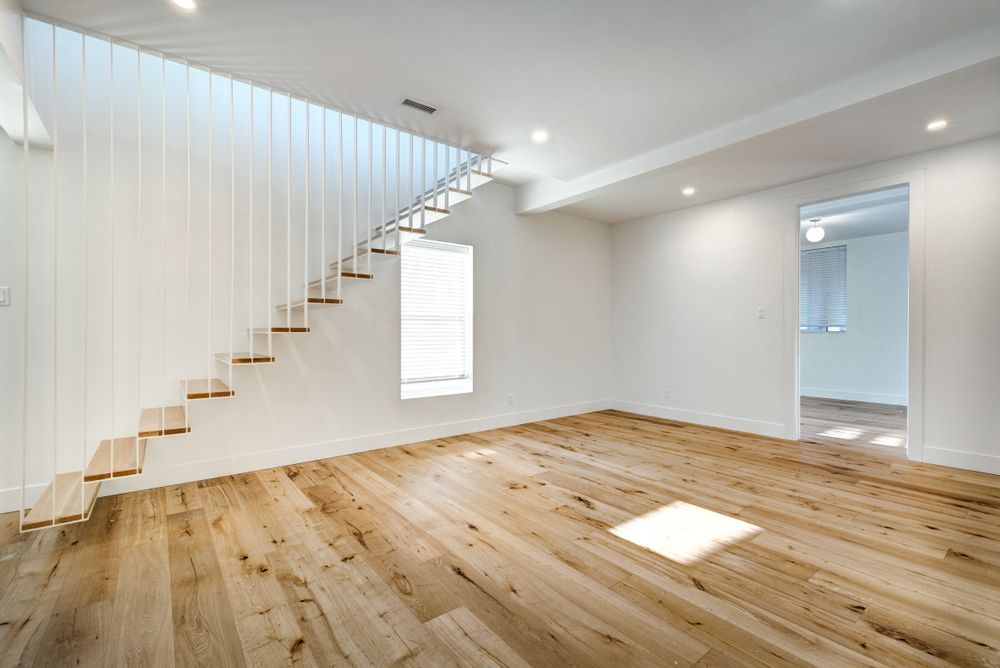
After finishing, you will have walls that look and feel like the rest of your home, flooring that is warm underfoot and easy to maintain, and lighting that eliminates the dark, unwelcoming feel of an unfinished basement. The space will hold a steady temperature, resist mustiness, and provide room for furniture, equipment, or guests without concerns about dampness or cold drafts.
Flooring options are selected based on moisture tolerance and intended use, and finishes are installed to allow for future maintenance access to mechanicals. The scope includes planning for egress requirements if the space will be used as a bedroom, and ensuring that HVAC and dehumidification are adequate for the added square footage.
Common concerns when finishing below-grade space
Homeowners in Warwick often have specific questions about moisture, temperature, and building codes before finishing a basement. These answers address the practical concerns that come up during planning.
J and J Building and Remodeling LLC works with homeowners in Warwick who want to finish basement space without risking moisture problems or code violations. If your basement is sitting unused and you are ready to make it livable, get in touch to discuss framing, insulation, and finishing options.