
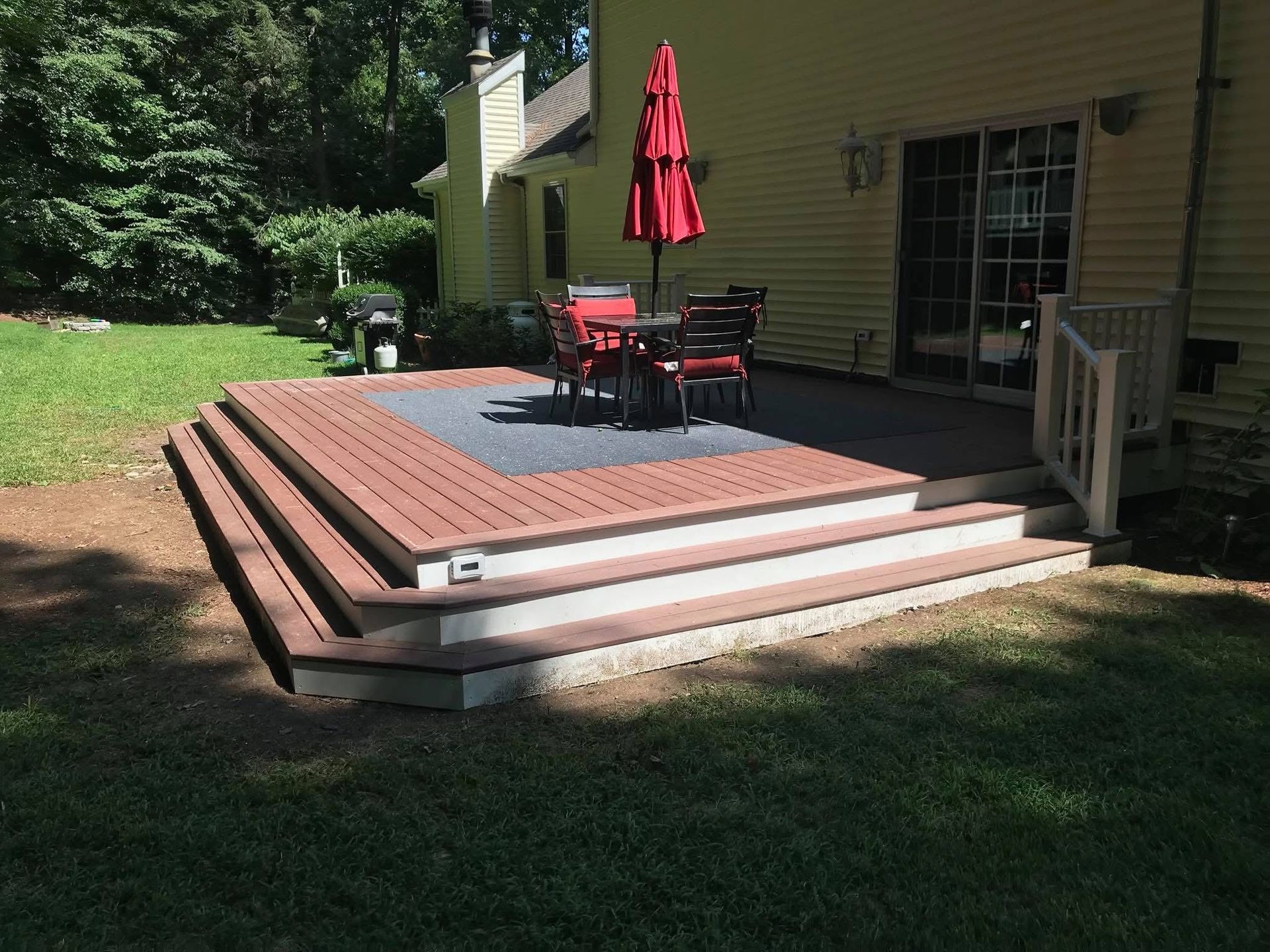
Expand Your Living Space With a Custom Deck
Deck and outdoor living construction in Warwick, Rhode Island
You want more space to eat outside, host friends, or relax after work, but your yard does not have a flat area that works without a raised platform. A well-built deck gives you that outdoor room and holds up through rain, snow, and the freeze-thaw cycles that cause poorly built structures to sag or separate from the house. J and J Building and Remodeling LLC builds custom decks in Warwick and surrounding areas, using pressure-treated lumber and composite materials that stand up to seasonal temperature changes and heavy use.
Deck construction starts with footings dug below the frost line to prevent shifting, followed by framing with properly sized joists and beams to support the load. The deck is attached to the house with lag bolts and flashing to prevent water from getting behind the siding. Composite material options and pressure-treated lumber are both available depending on your preferences for maintenance and appearance. The finished deck expands your entertaining and outdoor relaxation space and can be coordinated with additions and exterior remodeling projects.
If you are ready to add a deck to your home in Warwick, contact J and J Building and Remodeling LLC to discuss design options and receive a quote based on your yard and home layout.
How footings and framing affect long-term stability
Your deck project in Warwick begins with layout and excavation for footings, which are poured and set to support the posts that carry the deck frame. Ledger boards are attached to the house with through-bolts, and flashing is installed to direct water away from the connection point. Joists are spaced according to the decking material and span requirements to prevent bounce or sag over time.
Once the deck is built, you will notice that the surface is level, the boards are evenly spaced, and the railing feels solid when you lean on it. Water drains between the deck boards instead of pooling, and the structure does not shift or creak underfoot. Designed for durability through seasonal temperature changes, the deck holds up through winter snow loads and summer sun without warping or splitting.
Stairs are framed with stringers cut to code-compliant rise and run, and railings are installed at the required height with balusters spaced to meet local building standards. If you are also adding an outdoor kitchen, pergola, or seating area, the deck layout is planned to accommodate those features. The result is an outdoor space that functions well and requires minimal maintenance over the years.
Common questions before starting a deck project
Homeowners in Warwick often ask how deep footings need to be, what material lasts longest, and whether a permit is required for deck construction. These are the questions that come up most often before building begins.
J and J Building and Remodeling LLC schedules deck construction in Warwick around your availability and coordinates with other trades if siding, roofing, or addition work is happening at the same time. Get in touch to discuss your deck project and receive a timeline based on your home and yard.